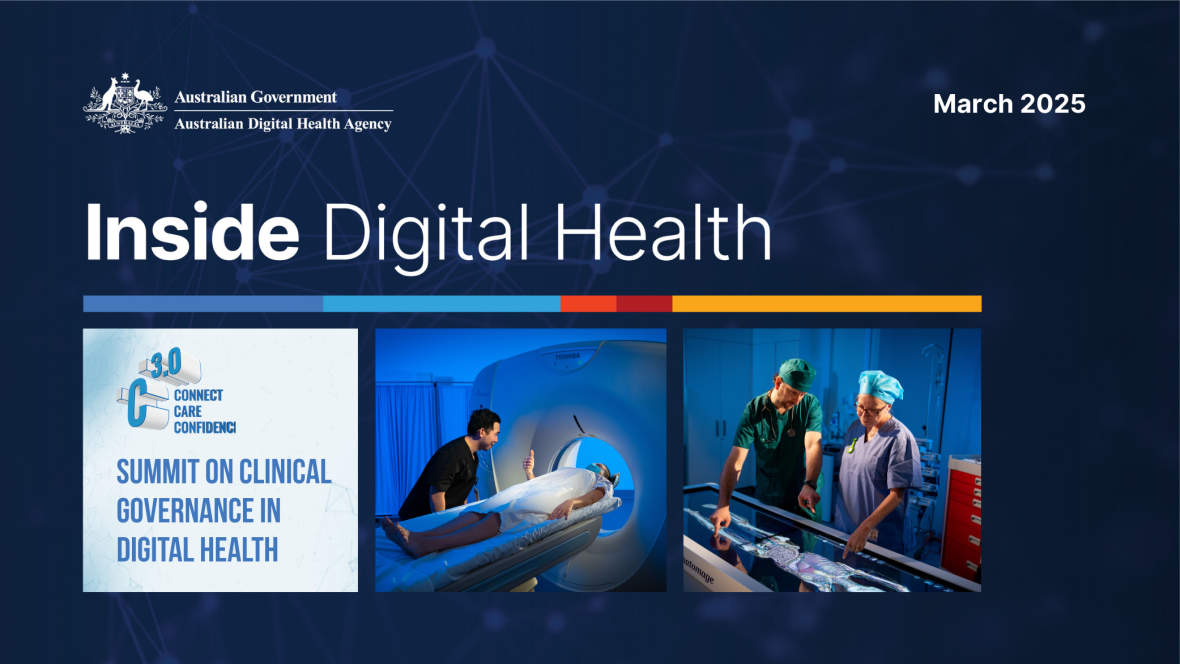
Read about the 2025 C3.0 Connect. Care. Confidence. Summit on Clinical Governance in Digital Health, see why Australia's National Digital Health Strategy has been ranked number one in a global eHealth study and find out how you can support people with endometriosis. Plus, take a look at the future of telehealth, and a new investment win for an Australian health-tech start-up.
It's all in the latest issue of Inside Digital Health.
What would you like to see in Inside Digital Health? Let us know in the comments or by emailing social@digitalhealth.gov.au.
Subscribe to Inside Digital Health on LinkedIn

C3.0 Connect. Care. Confidence.
On 18 February 2025, the Agency, in partnership with the Australian Commission on Safety and Quality in Health Care hosted the C3.0 Connect. Care. Confidence. Summit on Clinical Governance in Digital Health.
Broadcast live from the Calyx at Sydney's Botanic Gardens, the summit brought together leading innovators, service providers, expert clinicians and consumers for a day of insightful panel discussions, case study presentations and interactive Q&A sessions.
The summit focused on building strong and effective clinical governance in the digital health space. Key topics included building a digitally ready workforce, cyber security, and innovative approaches to consumer co-design and clinical governance in First Nations health.
Hosted by Peter Birch of Talking HealthTech, the event featured prominent speakers from Australia and around the world, including Dr John Halamka, M.D., M.S. and Dr Bertalan Meskó, MD, PhD, who shared their expertise and experiences in delivering person-centred services and supporting digitally enabled care.
The summit built on the success of the 2023 event, providing a platform for stakeholders to collaborate and share insights on the latest advancements in digital health. The event underscored the importance of continuous improvement in the delivery of health technologies and the shared responsibility of safety and quality in clinical governance.
Agency CEO Amanda Cattermole PSM said at the summit: 'Today we heard about the incredible importance of making sure there is change across the system. It is not enough to have pockets of excellence. We know there are still silos and consumers are bearing the burden. We therefore need everyone to come on this journey; no one can be left behind. Our continuously improving health system has to deliver that for everyone.'
We extend our gratitude to all participants, speakers and organisers for making this year's summit a resounding success.
🖥️ Watch the keynotes, panel discussions and case studies on the Agency's website.
Endometriosis awareness with EndoZone
Authors: Professor Louise Hull, Head of the Endometriosis Research Group at the University of Adelaide and Dr Diksha Sirohi, PhD (Medicine) Candidate and Researcher (EndoZone) at the University of Adelaide.

Endometriosis is a chronic condition where endometrial tissue – cells similar to the lining of the uterus – grow outside the uterus. It affects millions of women and those assigned female at birth, with symptoms including painful periods, chronic pelvic pain, pain with sex, stabbing sharp pain, bowel and bladder pain, fatigue, headaches, nausea and fertility implications.
Receiving a diagnosis can take up to 6 to 8 years and typically requires costly and invasive surgeries. These delays can be reduced by empowering women to seek and receive treatment from healthcare providers with a good understanding of the condition.
EndoZone – a digital health platform for endometriosis
EndoZone is an initiative from the National Action Plan for Endometriosis designed to bridge this gap, digitally linking those with endometriosis to individual initiatives and promoting collaborative support with healthcare providers and researchers.
Launched in March 2022, it has had over 120,000 visitors globally.
The initiative is funded by the Australian Government Department of Health, Disability and Ageing and Jean Hailes for Women's Health, and co-created with the Australian endometriosis community, bioinformatic experts, researchers, and clinicians to provide free, evidence-based information on endometriosis.
Features for patient care, education and research include:
🔹the Symptom Checker tool, which allows users to input symptoms and get recommendations for actions to take (for example, when to see a doctor)
🔹the Health Report feature, which enables users to track their symptoms and treatment history to improve visibility during medical appointments
🔹the digital algorithms, which provide personalised self-management strategies, including tools and activities that can help manage pain
🔹handy tips that parents, teachers and employers can use when planning school and work adjustments for people with endometriosis
🔹clinical resources, which provide education and updates on clinical management, for example, national and international guidelines by professional societies such as ESHRE, RANZCOG and NICE, and EndoZone's research page, which maps out current Australian endometriosis research.
If you know someone struggling with endometriosis, encourage them to visit the EndoZone website.

Australian man survives 100 days with artificial heart in world-first success

An Australian man with heart failure has become the first person in the world to walk out of a hospital with a total artificial heart implant.
The Australian researchers and doctors behind the operation announced that the implant had been an 'unmitigated clinical success' after the man lived with the device for more than 100 days before receiving a donor heart transplant in early March.
The BiVACOR total artificial heart, invented by Queensland-born Dr Daniel Timms, is the world's first implantable rotary blood pump that can act as a complete replacement for a human heart, using magnetic levitation technology to replicate the natural blood flow of a healthy heart.
💻 Read more on the BiVACOR website.
📰 Read the full article in on The Guardian website.
What's next for telehealth?
Before COVID-19, patients were more likely to choose face-to-face care over a telehealth consultation. In fact, in some countries, including the United States, telehealth consultations were simply not an option. But when the pandemic hit in 2020 the use of telehealth increased and, even now – post-lockdowns and social-distancing – is still widely used.
This shift to telehealth has created space for innovation and technology advancements in health and medicine. So, what does the future of telehealth look like?
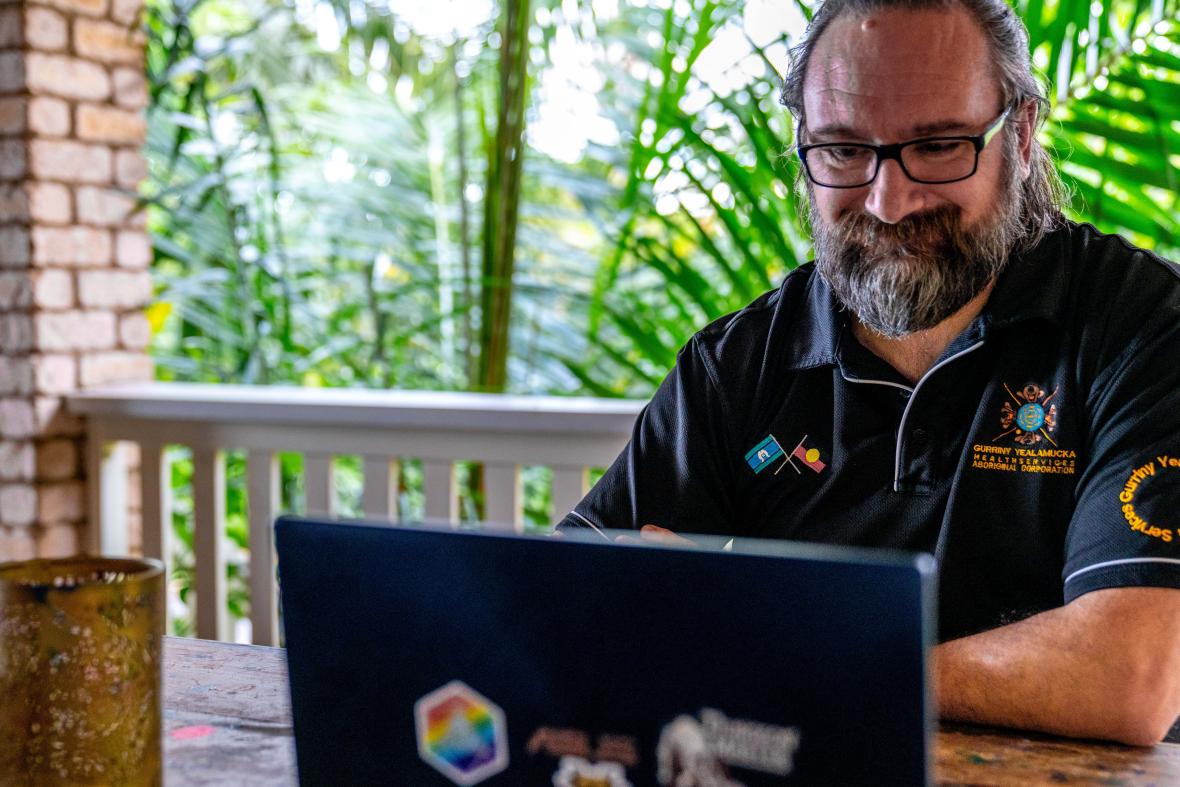
An article from Harvard Medical School explains that greater use of telemedicine has improved patient access by the number of visits and continuity of care with a modest increase in spending, but it's blurred the lines of what is considered practising medicine when considering things like instant messaging or electronic alerts between patients and doctors.
Forbes notes that to keep scaling telemedicine, the focus should be on quality of care, attracting and upskilling the right talent and collaboration across the whole healthcare industry.
We'd love to know what you think of the future of telehealth. Are there areas you'd like to see improved? To share your thoughts, leave a comment below.
AI in Medicine: Harrison.ai's funding win
Australian health tech startup Harrison.ai has announced it raised USD$112 million (AU$179 million) in Series C funding to scale its international reach. The company builds AI-enabled medical diagnostic software and services that support radiologists and medical examiners by analysing CT scans, X-rays and pathology slides.
Harrison.ai builds AI tools to help medical practitioners and clinicians diagnose conditions with better accuracy and efficiency, enabling reduced wait times for results, earlier detection and quicker treatment decisions. The funding will allow the company to further expand in key markets, including the United States, Asia–Pacific, Europe, the Middle East and Africa.

Australia's National Digital Health Strategy ranked number one in global eHealth study
Australia has been ranked as a world leader in a global academic study which highlighted the vision and implementation roadmap of Australia's National Digital Health Strategy 2023-2028.
The strategy ranked number one alongside Estonia's according to Sweden's Uppsala University which evaluated the eHealth frameworks of 9 countries focusing on vision, objectives, methods of implementation, and follow-up protocols.
The Agency's CEO, Amanda Cattermole PSM, said the high ranking underscores Australia's leadership in developing and implementing a comprehensive, transformational and action-oriented eHealth strategy.
'It is an honour to have the National Digital Health Strategy's vision of "an inclusive, sustainable and healthier future for all Australians through a connected and digitally enabled health system" acknowledged in this way,' Ms Cattermole said.
'It is testament to the collective insights, engagement and cooperation of Australia's digital health sector and dedicated stakeholders across federal, state and territory governments.'
Read the media release or learn more about Australia's National Digital Health Strategy 2023-2028 on the Agency's website.

Australian Financial Review Healthcare Summit | 7 April 2025 | Sydney, NSW
The AFR's annual Healthcare Summit in Sydney will dissect the dramatic changes affecting Australia's vital healthcare industry; the trends and challenges reshaping how Australians combat disease and strive for longer, healthier lives; and whether the nation can maintain its world-class healthcare status in the face of evolving demands.
Digital Health Festival | 13–15 May 2025 | Melbourne, VIC
DHF brings together 8,000+ senior execs for 2 frenetic days of learning, networking and fun, full of spaces for connection to thrive, where attendees can rub shoulders with leaders in digital transformation – senior execs, clinicians and tech experts from hospitals, primary and allied health, pharma and aged care, alongside Australia's wellness community.

If you’re looking for a role that’s professionally and personally rewarding and offers career growth and mentoring, check out the latest jobs at the Australian Digital Health Agency.
- Technical Delivery Lead – applications close 9 April, 11 pm (AEDT)
- Director, Architecture Practice and Delivery – applications close 9 April, 11 pm (AEDT)
- Analytics Manager – applications close 10 April, 11 pm (AEDT)
- Mobile Application Developer – applications close 10 April, 11 pm (AEDT)
- Reporting Analyst – applications close 11 April, 11 pm (AEDT)
- Lead Cyber Awareness and Education Officer – applications close 13 April, 11 pm (AEDT)
- Director Budgets and Systems – applications close 13 April, 11 pm (AEDT)
- Knowledge Manager – applications close 13 April, 11 pm (AEDT)
- Graduate Program – applications close 14 April, 11 pm (AEDT)
- Product Manager – applications close 14 April, 11 pm (AEDT)
- Lead Threat Detection and Security Engineer – applications close 15 April, 11 pm (AEDT)
- Lead Cyber Compliance Officer – applications close 15 April, 11 pm (AEDT)
- Assistant Director, Design – applications close 21 April, 11 pm (AEDT)
- Senior Integrity Officer – applications close 21 April, 11 pm (AEDT)
- Senior Systems and Programs Officer – applications close 21 April, 11 pm (AEDT)
- Solution Architect – applications close 21 April, 11 pm (AEDT)
- Project Officer – applications close 21 April, 11 pm (AEDT)
- Snr IT Business Analyst – applications close 21 April, 11 pm (AEDT)
- Engagement Lead – applications close 22 April, 11 pm (AEDT)
- Cyber Security Compliance Officer – applications close 23 April, 11 pm (AEDT)
- DevSecOps Engineer – applications close 23 April, 11 pm (AEDT)
- Principle DevSecOps Engineer – applications close 23 April, 11 pm (AEDT)
- Branch Support Officer – applications close 27 April, 11 pm (AEDT)
- Temporary Employment Register – always open
- APS Section 26 Transfer - Permanent and Temporary - Employment Register – always open
See more vacancies on our careers page.

The world of digital health evolves in a heartbeat. Help us stay on the pulse by sharing your thoughts, news and ideas.
Email: social@digitalhealth.gov.au
Subscribe: To keep up to date with digital health news, events and more.
Follow: Like, follow and join the digital health conversation.
