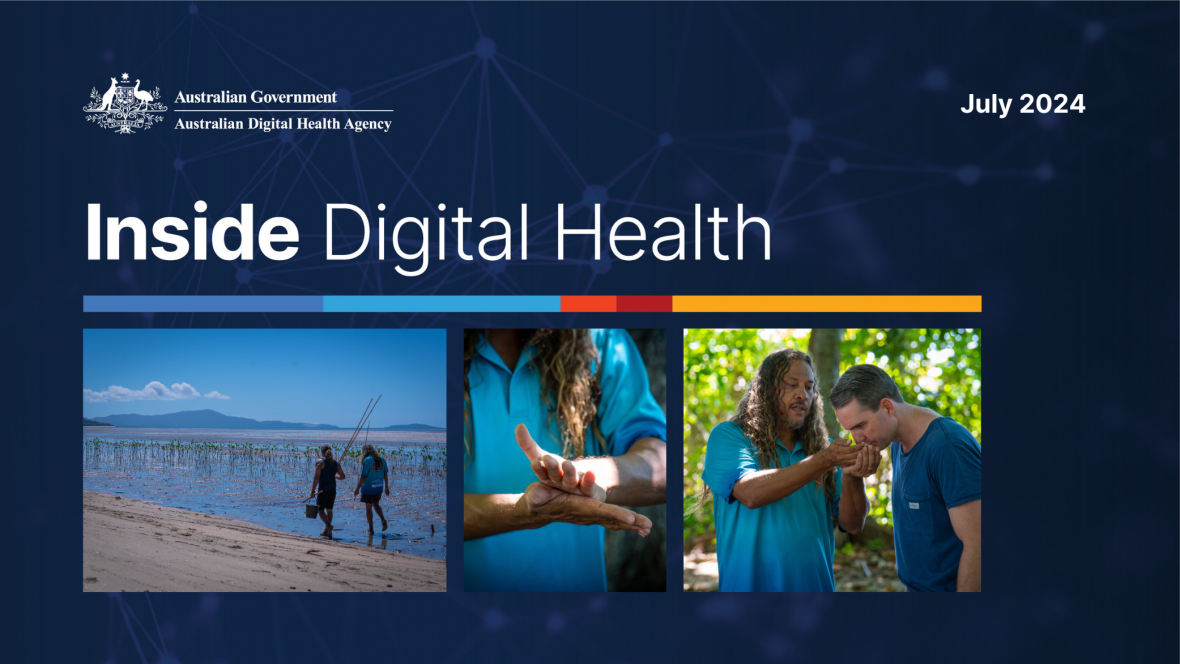
In celebration of NAIDOC Week (7–14 July), we’re looking at how digital health tools can support Aboriginal and Torres Strait Islander peoples to manage their health and complement traditional bush medicine.
We are also introducing our new Chief Clinical Adviser (Medicine), putting a spotlight on the technologies that can assist people with diabetes and highlighting some exciting innovations in digital health.
What would you like to see in Inside Digital Health? Let us know in the comments or by emailing social@digitalhealth.gov.au.
Subscribe to Inside Digital Health on LinkedIn
Combining culture and technology
In recent years, digital health initiatives such as telehealth and My Health Record have had an impact on healthcare access and delivery, bridging gaps in access, improving outcomes and supporting Indigenous Australians, particularly those in rural and remote areas, to have more ownership over their healthcare and data.
Dr Jason King, a Yued Noongar man from Dandaragan, Western Australia, is the Director of Clinical Services at Gurriny Yealamucka Health Services in Yarrabah, Queensland. He has seen firsthand how digital health tools have empowered patients and supported healthcare delivery for Aboriginal and Torres Strait Islander peoples.
“One of the fascinating things about Aboriginal culture is that information about the world around them has always been evolving, so communities, almost by second nature, understand the importance of transmitting information from one generation to the next,” he says.
“For thousands of years, they’ve been custodians of data. In the 21st century, with these digital health tools at their fingertips, Aboriginal communities really have the opportunity now to extend their ability to be the owners of their own care.”
“One of the most important things in providing safe healthcare is having consistent information – and for the patient who might not understand all of their medications, having that safe and secure, central source of information in My Health Record is really a massive guarantee.”
That information can include bush medicine that patients may be using, which can be recorded in a personal health summary in My Health Record.
Linc Walker, owner and tour guide at Kuku Yalanji Cultural Habitat Tours in Cooya Beach, north of Port Douglas, says traditional medicine has always been part of his culture.
“We use traditional medicine because we’ve always used it,” he says. “When we were young it was too far to town, the shops were too far away and so we had to do this. It’s part of our life still.”
In a video for the Australian Digital Health Agency, Linc discusses bush medicines with a local pharmacist and shows how mullet soup oil is used to soothe sore and aching joints, how the white fruit of beach lettuce can be squeezed softly for an eye or skin wash, and points out 3 different medicines made from green ants.
“There is a great opportunity for our mob to put this information into My Health Record, to get it down and documented,” Linc said.
“We’ve never had this opportunity and we’ve never been asked before and it can only better the health of our people. This is an opportunity for people to record information that they can use in the future. For our mob, this is just the start.”

Biotech to blast cancer
A new Australian biotech company will use world-leading technology to tackle hard-to-treat cancers. Ternarx, a spin-out company from the WEHI (Walter and Eliza Hall Institute of Medical Research), will develop new protein degrader technology to create next-generation cancer medicines with greater efficacy and fewer side effects. Ternarx will initially focus on neuroblastoma and prostate cancer. If successful, the technology could be expanded to other types of cancer and disease-causing proteins.
Cutting-edge tech to kill viruses
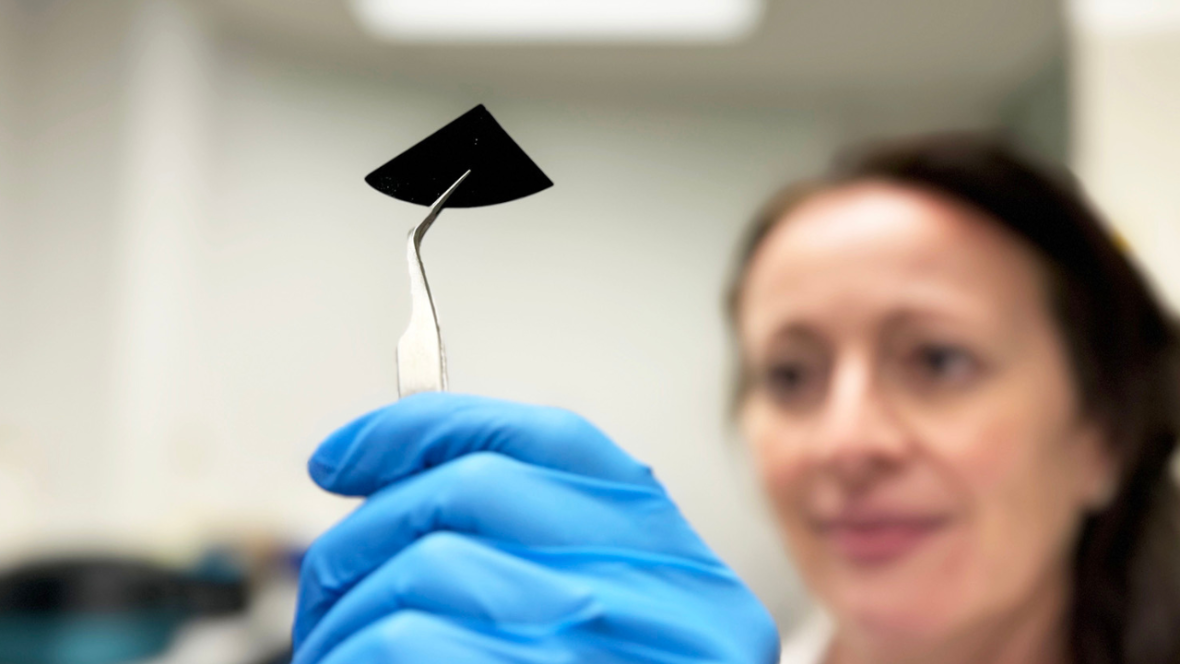
A silicon surface covered in tiny nanospikes could help control disease spread in hospitals, labs and other high-risk environments. Developed by a team of researchers led by RMIT University, the surface uses the nanospikes to skewer viruses on contact. Tests with the HPIV-3 virus, which causes bronchitis, pneumonia and croup, showed 96% of the viruses were either ripped apart or damaged to the point where they could no longer replicate to cause infection.
AI tool to classify brain tumours
A new artificial intelligence tool that can classify brain tumours has been developed by researchers in Australia and the United States. DEPLOY uses deep learning to identify different kinds of brain tumours and classify them into 10 major subtypes. Precision in this diagnosis is crucial for effective treatment outcomes. The researchers from The Australian National University and the National Cancer Institute (NCI) note that the technology could eventually be used to help classify other types of cancer.

Access to tech can help tackle diabetes
More than 1.5 million Australians are living with diabetes and 120,000 people are diagnosed each year. Below, Diabetes Australia explains how improved access to technologies can support people with the condition.
National Diabetes Week (14–20 July) is an opportunity for all Australians to examine a future where diabetes can do no harm.
This year, Diabetes Australia is shining a light on the impact of diabetes technology and what needs to be done to improve access.
At a time when diabetes across the country has hit a crisis point, the need to expand subsidies for diabetes technology is urgent.
People living with all types of diabetes need affordable access to technologies such as insulin pumps and continuous glucose monitoring (CGM). These technologies have been shown to improve health outcomes and quality of life. Access should be based on clinical need rather than ‘type’ of diabetes.
There is an urgent need for more equitable access to diabetes technologies in Australia.

Currently, people living with type 1 diabetes have subsidised access to CGM devices, but this does not extend to insulin pumps.
If a subsidised CGM device and a subsidised pump were both available for people living with type 1 diabetes, the devices could be linked to build an automated insulin delivery system. This is the gold standard of management for a person living with type 1 diabetes.
Similarly, if people living with type 2 diabetes were able to access subsidised CGM, they would have an affordable method of ongoing blood glucose monitoring without the burden of finger-prick checks. CGM drastically improves time in target glucose range (the percentage of time a person with diabetes spends with their sensor glucose levels in a particular target range) and, ultimately, prevents complications and hospitalisations.
Diabetes Week is an opportunity for all Australians to join a national conversation about solutions to ensure Australians with all types of diabetes have access to the technology they need to live well. It’s an opportunity to unite in the fight for tech.
Find out more about National Diabetes Week.

New Chief Clinical Adviser (Medicine) at the Australian Digital Health Agency
Dr Amandeep Hansra, a leading expert in digital health, has been appointed as the Agency’s new Chief Clinical Adviser (Medicine). Dr Hansra has been one of the Agency’s Digital Health Advisers for the past 6 years and has extensive experience in clinical practice, education and governance. She will take over from Dr Steve Hambleton AM, who has served in the role since 2016 and will continue to work with the Agency as a Specialist Adviser.
Agency CEO Amanda Cattermole PSM said Dr Hansra’s skill set would be a great asset for the Agency. “Dr Hansra is a visionary leader who has been at the forefront of transforming healthcare delivery through digital solutions.”

New roadmap to drive use of healthcare identifiers
The new national strategy will drive uptake of healthcare identifiers – unique numbers that identify individuals and are used by healthcare providers and healthcare organisations to connect the right information with the right person at the point of care.
The National Healthcare Identifiers Roadmap 2023–2028, published by the Australian Digital Health Agency in partnership with the Australian Government Department of Health, Disability and Ageing, outlines 20 activities to drive wider adoption of healthcare identifiers by improving the quality and adoption of the Healthcare Identifiers Service.
The Agency’s Chief Digital Officer Peter O'Halloran said the broad adoption of national healthcare identifiers would enable a connected and interoperable health system where every individual, healthcare provider and organisation can be accurately and quickly identified.
“Healthcare identifiers are the linchpin for safe, secure and seamless information sharing across the nation’s healthcare system in near real time. They are central to the evolution of digital health and will empower consumers to have continuous care across all healthcare facilities in every corner of Australia,” Mr O’Halloran said.
Download the Healthcare Identifiers Roadmap 2023-2028.

HealthTech Forum | 1 August 2024 | Sydney
Hear from the Agency’s Chief Digital Officer Peter O'Halloran at the HealthTech Forum. The forum will feature more than 20 industry speakers to discuss how technology and innovation can improve patient outcomes and revolutionise healthcare delivery.
Health Innovation Community Conference | 5–7 August 2024 | Brisbane
Digital health leaders across industry, academia, government, clinical practice and consumers will come together next month for HIC 2024 in Brisbane. Hosted by the Australasian Institute of Digital Health (AIDH), the conference includes plenary sessions, panel discussions, and workshops. Register for the conference online.

If you’re looking for a role that’s professionally and personally rewarding and offers career growth and mentoring, check out the latest jobs at the Australian Digital Health Agency.
- APS5 Bulk Recruitment – applications close 17 July, 11 pm
- APS6 Bulk Recruitment – applications close 17 July, 11 pm
- EL1 Bulk Recruitment – applications close 17 July, 11 pm
- EL2 Bulk Recruitment – applications close 10 July, 11 pm
- Service Asset and Configuration Librarian – applications close 19 July, 11 pm
- Cloud Systems and Infrastructure Engineer – applications close 17 July, 11 pm
- Terminologist – applications close 17 July, 11 pm
- Service Desk Support – applications close 16 July, 11 pm
- Contract Administration Officer – applications close 15 July, 11 pm
- Temporary Employment Register – always open
- APS Section 26 Transfer - Permanent and Temporary - Employment Register – always open
See more vacancies on our careers page.

The world of digital health evolves in a heartbeat. Help us stay on the pulse by sharing your thoughts, news and ideas.
Email: social@digitalhealth.gov.au
Subscribe: To keep up to date with digital health news, events and more.
Follow: Like, follow and join the digital health conversation.
