
Dear reader,
Welcome to the sixth edition of Partnership Pulse, and thank you to our partners and stakeholders for your ongoing support and engagement with this newsletter.
Since our previous edition, the 1800MEDICARE app has reached over one million downloads, reflecting strong demand for accessible, secure digital health services and the important role you play in supporting awareness and adoption across the community.
Building on this momentum, we recently hosted our Agency Update Webinar, thank you to everyone who joined us. The session shared updates across key initiatives at the Agency, including:
- Provider Connect Australia (PCA) and the Health Connect Directory
- 1800MEDICARE app roadmap and notifications
- Interoperability and Healthcare Identifier Roadmap (HI Roadmap)
- My Health Record on FHIR® and;
- The Streamlining of Implementation for Conformance and Connection (SLICC) project and recent improvements to the Implementer Hub
A key highlight was the launch of the new Clinical Safety in Digital Health – Intermediate course by our CEO, Amanda Cattermole PSM. Building on last year’s introductory course, it focuses on applying clinical safety principles in real-world digital health settings to strengthen workforce capability. As Amanda noted, it explores “how clinical safety principles apply across real life digital initiatives from early design through implementation”. More information is available in the Learning Spotlight section below.
As announced in the 2026-27 Federal Budget, the Government has committed to further investment in digital health, with the Agency receiving significant funding to continue the operation of My Health Record (MHR), expand better access under Sharing by Default, progress the next stages of the National Medicines Record and establish the National Digital Child Health Record to support Thriving Kids. The Government has also recognised the benefit to the Health portfolio that Sharing by Default of pathology and diagnostic imaging to MHR will provide, with indicative savings of $146.3 million in administrative funding through the reduction of duplicated tests and associated Medicare claims.
Finally, last week Chief Digital Officer, Peter O’Halloran, launched the National Framework for Digital Health Standards at the Digital Health Festival. More information is available on this in the media section below.
We hope you find this edition valuable and welcome your feedback, please take a moment to complete our short survey and share your thoughts.
Thank you again for your continued partnership as we work together to create a more connected healthcare system for all Australians.
Kind regards,
Linda Neale
Acting Branch Manager, Partnerships and Education
Australian Digital Health Agency
In this article:
- Agency spotlight
- Agency news
- Recent highlights
- Opportunities to contribute
- Upcoming events
- Learning spotlight
Agency spotlight
Supporting healthcare providers with new Healthcare Identifiers education resources
Healthcare identifiers underpin many national digital health systems, yet information about how to access and use the Healthcare Identifiers (HI) and the HI Service has often been spread across multiple sources.
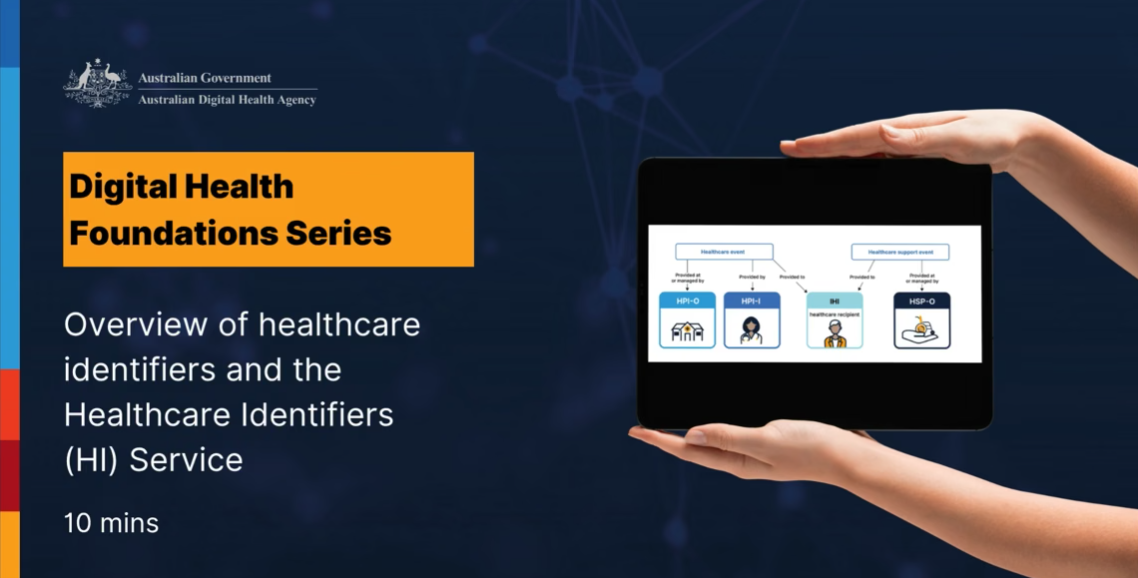
To make this easier, the Agency has released the Digital Health Foundation Series to support healthcare providers, organisations and software partners with clear, consistent and practical information.
The Digital Health Foundation Series are a set of short, practical videos that help healthcare providers understand healthcare identifiers, connect to the HI Service, and register for My Health Record and electronic prescribing.
These audience friendly videos make it easier to understand and complete key processes by providing step-by-step guidance in a format that is quick to absorb and simple to use. They directly support providers to:
- understand what healthcare identifiers are and why they matter
- connect to the HI Service
- complete registration for My Health Record and electronic prescribing
By delivering clear, accessible education, the Digital Health Foundation Series reduces complexity, builds confidence and helps providers see how the HI Service fits within the broader national digital health ecosystem.
The videos can be found on the Digital Health website, which also provides a single point of reference for healthcare identifiers and the HI Service. It brings together trusted guidance in one central location.
👉 Explore the Healthcare Identifiers resources and share them with your networks to support confidence and consistency across the digital health system.
Agency news
Standards framework for digital health a clear path to connected care
In a significant milestone in the evolution of connected care, the National Framework for Digital Health Standards has been published to support a more consistent, connected and clinically safe digital health system.
Growing demand for health information pushes 1800MEDICARE app downloads over 1 million
Australians are increasingly eager to take control of their health, with more than 1 million downloads of the 1800MEDICARE app highlighting the strong consumer demand for secure and convenient access to key health information.
Recent highlights
Cyber Security: Cyber Champions Network
“Every cyber champion is proof that cyber resilience is built from the ground up, and together we are shaping a stronger, safer healthcare sector”
Why become a Cyber Champion?
Australia’s healthcare sector is facing ever-evolving cyber threats, and now more than ever, building a strong cyber security culture is vital. The Agency is helping to empower healthcare professionals to proactively understand and defend against cyber risks through the Cyber Champions Network.
What is the Cyber Champions Network?
The Cyber Champions Network is a community of healthcare professionals with the collective goal to foster a proactive, engaged, and security-conscious healthcare ecosystem. Together, members are strengthening Australia’s collective cyber defences and enhancing the sector’s ability to respond to emerging threats.
National uptake
Since its launch in August 2024, the program has achieved strong national engagement, with 132 participants across 104 healthcare organisations across Australia successfully completing the course. Participating organisations have deepened their understanding of cyber threats and significantly increased their resilience to cyber-attacks.
How does the program work?
Participants take part in five interactive fortnightly sessions, each running for 90 minutes. The program is designed to build positive cyber behaviours, including:
- Understanding the cyber security threats and risks currently affecting Australian healthcare organisations.
- Learning best practice approaches to securing systems and information
- Recognising that cyber security is everyone's responsibility, including understanding the impact of social media and digital footprints, as well as supply chain risk and vendor management.
- Building cyber resilience through the development of a cyber incident response plan and a cyber security awareness program.
In addition, Cyber Champions gain access to a wide range of ongoing resources and practical tools to uplift cyber awareness and foster a strong security culture within their organisations.
Participant feedback
“This program provided clear, up‑to‑date cybersecurity awareness tailored for small to medium allied health practices. It covered real‑world threats, practical prevention strategies, and effective response measures, empowering both management and staff to protect patient data and business operations. I highly recommend this training to all allied health clinics in primary health care. it’s an invaluable step toward building a strong, organisation‑wide cybersecurity culture.”
- Board Director, Allied Health Network
Ready to Join?
Participation in the Cyber Champions Program is free.
New cohorts will commence on:
- 23rd June 2026
- 2nd July 2026
Don’t miss this opportunity to become a leader in cybersecurity within your healthcare organisation. Take the next step to protect your organisation and join the Cyber Champions Network today!
Learn more about Cyber Security?
Our Cyber Security Team monitors digital threats relevant to healthcare and issues timely alerts on vulnerabilities and cyberattacks. Stay informed by subscribing to Cyber Alerts.
Share by Default program update
The countdown is on! From 1 July 2026, most reports authored by pathologists or radiologists will be uploaded to My Health Record by default.
This important reform supports continuity of care, by improving access to key health information that supports diagnosis, treatment and ongoing management of health.
View the Share by Default scope guide to confirm your understanding of when uploads are required.
Extensions process
If an organisation has a genuine reason that it won’t be able to meet requirements to upload reports authored by pathologists or radiologists by 1 July 2026, it can apply for an extension of time to comply. Extension requests should be submitted prior to 1 July 2026, otherwise they will be subject to the upload requirements from that date.
Information on eligibility and how to apply is available on the Agency's website.
Exceptions
In some cases, an exception to the upload requirement may apply. For example, where:
- a consumer does not have a My Health Record
- a consumer or their representative requests that certain reports are not uploaded
- a healthcare provider reasonably believes that a report should not be shared because of a serious concern for the health, safety or wellbeing of the individual
- circumstances outside a healthcare provider’s control prevent upload (such as an unforeseen technical or system issue.
The organisation that is subject to the upload requirement must retain evidence of the exception for 2 years from the date the health service was provided.
Learn more
For healthcare providers:
- Share by Default overview
- Guide for requesting providers
- Guide for providers that undertake pathology and diagnostic imaging services
- Are the services provided in scope? - an interactive tool
- Applying for an extension of time to comply
- Resources for your patients: Consumer fact sheet
For consumers:
- Understanding better and faster access to health information
- Your questions answered: Fact sheet for healthcare consumers
- 1800MEDICARE app for convenient access to your health information, wherever you are.
For more information, visit digitalhealth.gov.au or email help@digitalhealth.gov.au.
Should you require any additional resources, tailored messaging or have any questions, please contact your Partnerships team at communityengagement@digitalhealth.gov.au.
Building Capability – Updates from the Standards Academy
The Agency has updated the Standards Academy page and invites you to explore its suite of free online courses. These courses are designed for a variety of roles and skill levels, with the aim of building the digital capability of learners and providing practical tools to implement digital health standards across the healthcare sector. Our most recent course offerings include:
- GS1 identification Standards in Digital Health: this course introduces the role of GS1 identification standards in digital healthcare, helping learners understand how these standards bridge the physical and virtual worlds of healthcare and improve patient safety.
- Developing a Smart on FHIR App: this advanced course will provide learners with the practical tools to build and deploy a SMART on FHIR app within a live healthcare system.
- Advanced FHIR Terminology: this advanced course brings awareness to Australia-specific FHIR terminology and how to utilise FHIR terminology resources, data types and operations to expand what’s possible in digital health.
- SNOMED courses: the Agency is also promoting six courses developed by SNOMED, including a Foundation course on the basics of SNOMED, and specialised Intermediate and Advanced courses for Clinicians, Developers, Implementers and Data Analysts.
Building digital health standards capability across Australia’s healthcare workforce supports our need for interoperability and connected care. Visit the Standards Academy and the course pages to enrol in a course to start learning about the possibilities of digital health standards.
If you have any questions about enrolling in a course or about the course content, contact the Standards Academy team at standardsacademy@digitalhealth.gov.au
Introducing the new Digital Health Adviser Cohort
The Agency is proud to introduce its new Digital Health Adviser (DHA) cohort - a highly skilled, multidisciplinary group of clinicians, informaticians and digital health experts who will help shape the design and delivery of safe, high-quality digital health solutions. This new cohort joins the broader DHA community at the Agency that also includes Consumer and Carer DHAs, ensuring that alongside clinical expertise, lived experience informs the development of inclusive, person-centred solutions.
Embedded within the Agency’s Clinical Governance and Assurance Branch, the DHA function plays a central role in strengthening clinical oversight and ensuring digital health initiatives are safe, effective and aligned with contemporary practice.
This new cohort brings together a broad range of expertise across the health system, including:
- Medical practitioners spanning general practice, emergency medicine, paediatrics, obstetrics, endocrinology and public health
- Clinical informaticians and medical executives leading digital transformation, AI governance and large-scale system implementation
- Allied health professionals such as pharmacists, speech pathologists, neuropsychologists, dietitians and occupational therapists
- Nursing leaders with experience in system implementation, workforce capability and digital strategy
- Researchers and academics advancing AI-enabled care models, digital interventions and health system innovation
- Consumer and carers bringing diverse lived experience and representing a wide range of communities, including those in rural and remote areas, and priority populations.
Collectively, they bring deep experience in areas such as clinical governance, telehealth, AI and emerging technologies, electronic medical records, interoperability, medication safety, user-centred design, and digital transformation across hospital, primary care and community settings.
DHAs provide strategic advice, clinical leadership and real-world insight to support assurance processes and continuous improvement across national programs, helping to build trusted, clinically sound digital health systems that improve outcomes for all Australians.
Education update
One way the Agency is working to build a digitally capable healthcare workforce is by providing tertiary educators with practical resources for integrating digital health into university courses.
The Digital Health Train the Trainer Toolkit supports academic educators to incorporate digital health within the curriculum. The Toolkit is a first-of-its-kind and was developed in a collaboration with the Australian Council of Senior Academic Leaders in Digital Health. Co-designed by academic leaders, clinical educators and digital health experts, the Toolkit provides a nationally agreed framework with learning outcomes for entry-to-practice health professional degrees and directs educators to resources to enable them to upskill and build confidence as they start teaching this new content. This initiative will prepare the next generation of healthcare professionals to confidently use digital technologies in practice, leading to safer, smarter and more connected care.
Access the Toolkit via the Agency’s online learning portal under the “For educators” tile.
You can also watch the following video to learn more about the Toolkit and how educators might use it. The future is now – helping you embed digital health in health degrees
Interoperability update
The 11th Interoperability Plan Quarterly Report (Q3, January - March 2026) was published in April, highlighting that 75% of actions are now complete.
In the Q3 report, two actions were completed: Action 2.3 - HL7® FHIR® AU usage and Action 4.2 Interoperability Workforce.
Together these actions helped to advance national digital health interoperability by embedding the HL7 FHIR AU standard across Agency and Healthdirect systems while building a digitally capable health workforce through targeted education and capability development. This is leading to significant progress towards the national vision for interoperability and reinforces transparency, accountability, and trust in government.
Council for Connected Care
The Council for Connected Care (CCC) convened in March to advance national priorities aimed at building a more connected and safer health system. Discussions closely aligned with the Agency’s current focus areas, including strengthening interoperability and shaping the next phase of My Health Record, with a shift toward FHIR-based services.
A key area of focus was the importance of strong clinical governance in enabling person‑centred, data‑driven care and in sustaining trust as digital health continues to evolve. This was particularly highlighted in the context of increasing use of high‑quality data and AI. Members welcomed the establishment of the National Clinical Governance Committee for Digital Health as a significant step in reinforcing national leadership and oversight in these areas. A summary of outcomes from the March meeting is now available.
The next CCC meeting will be held virtually on 23 July and will be dedicated to the Council’s Annual Review.
CareLynx now connected to My Health Record
We’re pleased to share that CareLynx is now connected to My Health Record, marking another important milestone in strengthening digital connectivity across the allied health sector and the broader health and care ecosystem. This means allied health providers using CareLynx can securely access My Health Record as part of their day‑to‑day clinical workflow, helping ensure the right information is available, when and where it is needed.
For consumers, CareLynx’s connection to My Health Record supports more connected, coordinated and person‑centred care. This will reduce the likelihood of unnecessary duplicate tests and appointments as allied health providers will have access to information from other care settings.
With CareLynx now connected to My Health Record, participating allied health providers can:
- view key clinical information in one place, including hospital discharge summaries and other shared clinical documents
- reduce time spent chasing information, minimising duplication and administrative burden
- support safer care transitions, particularly for people with complex or chronic conditions
- reap the benefits of the Share by Default mandate, which increase availability of pathology and diagnostic imaging reports, supporting more informed assessment, treatment planning and follow‑up care.
Importantly, this capability allows allied health professionals to work with the same shared information as the rest of a person’s care team. CareLynx’s connection is significant at a system level. Allied health is an essential part of integrated, team‑based care. Enabling allied health professionals to securely access and use My Health Record:
- strengthens information flow across the health system
- supports safer, more integrated care in community settings
- helps realise national priorities under Strengthening Medicare and the National Digital Health Strategy.
This milestone demonstrates how working with software vendors to embed My Health Record into existing clinical systems helps turn national digital health priorities into meaningful, on‑the‑ground change for clinicians and consumers.
What’s next
The Agency will continue working with software vendors, clinical peak bodies and the allied health sector to support adoption, build digital confidence and ensure My Health Record is used in ways that add real value at the point of care.
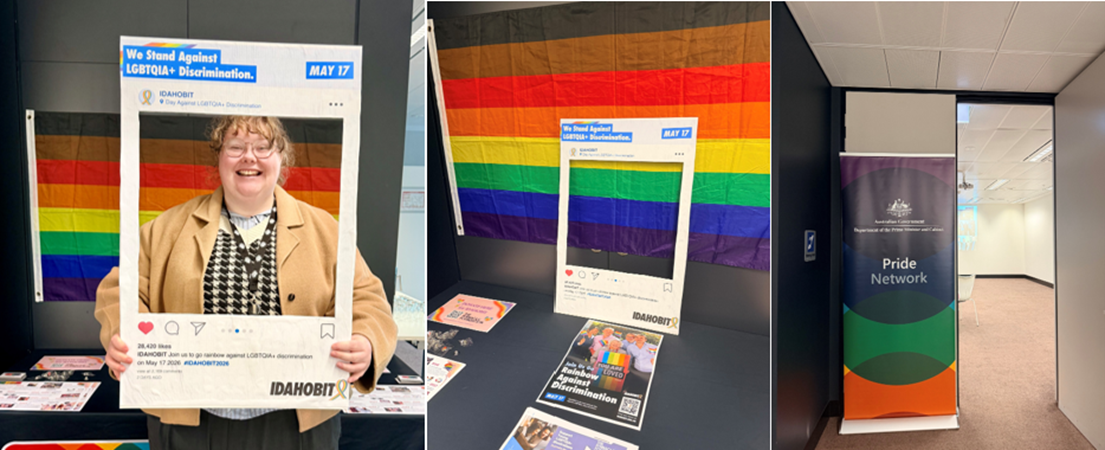
On 17 May, the Agency recognised International Day Against Homophobia, Biphobia, Intersexism and Transphobia (IDAHOBIT), a global day promoting inclusion and raising awareness of discrimination faced by LGBTQIA+ communities. The date marks the 1990 removal of homosexuality as a classification of disease by the World Health Organisation.
The Agency joined cross‑government events across the APS, with Jema Brown, Partnerships Lead for Aboriginal and Torres Strait Islander Digital Health (pictured below), contributing to these important discussions.
Opportunities to contribute

Sneak Peek: The future of the Implementer Hub (We want your thoughts)
We’d love you to play a key role in shaping the next chapter of the Digital Health Implementer Hub as it evolves to better support the connections and conformance journey.
As part of its rebrand, we’re rethinking how the Hub enables you to navigate connection with Agency Health products more seamlessly, and your input is essential to getting this right. In a relaxed one-hour 1:1 Teams session, you’ll be able to explore early concepts and prototypes we developed, share your experiences with the current process, and highlight what’s working, what is not, and what is still missing.
Your perspective will directly influence how the reimagined Hub supports your day-to-day work, making the journey clearer, more efficient and more aligned to real needs. By getting involved, you are helping shape a future experience that is built with you in mind, and we would genuinely value the opportunity to learn from you.
We'll be running session Mon - Wed for the month of June during office hours.
If you’re interested, send us an email implementer@digitalhealth.gov.au with availability on a day that suits you and our team will be in touch to arrange the session.
Have your say – help shape future editions Partnerhip Pulse
Your feedback helps ensure Partnership Pulse continues to deliver content that is relevant, useful and valuable to you and your organisation.
Whether it’s topics you’d like to see more of, areas we could improve, or general feedback, we’d love to hear from you.
The form is anonymous, however you’re welcome to leave your contact details if you’d like us to follow up or stay connected.
Upcoming events
SNOMED CT Expo 2026
Mark your calendar for SNOMED CT Expo 2026 this October, where the global health community will connect to shape the future of interoperable, data‑driven care.
Save the date: 21–23 October 2026
Location: Sydney, NSW

Learning spotlight
Clinical Safety in Digital Health – Intermediate
A new intermediate level eLearning course is now available to further advance clinical safety practices across Australia’s digital health workforce. Building on the success of the introductory course released last year, we are proud to launch our new eLearning course, Clinical Safety in Digital Health – Intermediate.
Developed in partnership with the AIDH, the course extends learning for professionals seeking to apply clinical safety principles in real-world digital healthcare settings and has been formally endorsed for the CHIA Program as part of Continuous Professional Development (CPD). We encourage all stakeholders to complete the course via our Online Learning Portal to help strengthen our collective commitment to safer digital health.
Organisations interested in hosting the course on their own learning management system can contact engagement@digitalhealth.gov.au.
Did you know ...
You can access your health information, prescriptions and test results in one place using the 1800MEDICARE app.
The app brings together information from your My Health Record, helping you and your healthcare providers access important details when needed.
To get started, download the 1800MEDICARE app and sign in using your myGov account linked to My Health Record.
Search for "1800MEDICARE" in the Apple App Store or Google Play Store to download.
Inside Digital Health
While Partnership Pulse keeps you up to date with our projects and programs, the Agency's Inside Digital Health newsletter on LinkedIn takes a wider view. It's all about innovations, global trends, and sector-wide updates, perfect for keeping up with the bigger digital health picture.